


Nutrition for Performance & Injury Prevention in Pole & Aerial

(Because you can't compete like an athlete if you don't fuel like one.)
Let's be honest. Most of us are more than happy to spend money on grip aid, fresh activewear, workshops and the latest pair of heels. But one of the biggest performance tools available to us tends to get forgotten - nutrition.

If you're training multiple times a week, working towards a comp or showcase, or simply trying to level up your pole, what you're eating matters more than you might think.
One of the most common things we see at The Pole Physio is underfuelling. Skipping meals, running on coffee, trying to lose weight while piling on more training, then wondering why everything feels so hard by the end of the week. Sound familiar?
Here's the thing: you can't compete like an athlete if you don't fuel like one.
Nutrition might be the problem, not your training
Most of us assume that when progress stalls, it's a training problem. Sometimes it genuinely is. But just as often, the body simply isn't getting enough to work with.
Nutrition might be holding you back if:
You're exhausted all the time
Your strength has plateaued
You keep picking up new niggles or injuries
You're sore for days after training
You're getting dizzy or lightheaded during sessions
You're more irritable or flat than usual
Recovery feels slower than it used to
If a few of these are hitting a little too close to home, it might be time to look beyond your training program.
Energy: the foundation of everything
"I'm exhausted all the time" is honestly one of the most common things we hear from polers and aerialists. And in a lot of cases, it isn't a motivation problem - it's a fuel one.

It's easy to underestimate how much energy you're actually using across a week. Between work, life admin, conditioning, flexibility training and your actual pole classes, it adds up fast. When you're not eating enough to match that, or you're leaving big gaps between meals and skimping on carbs, your energy is always going to suffer.
Your body can only run on empty for so long. If you're constantly flat, foggy or fighting your way through class, that's usually a sign it's time to look at how you're fuelling around your week. (We go deep on the what-to-eat side of things in our blog on what to eat before and after pole - worth a read alongside this one.)
Strength is built in recovery, not the studio
This one surprises people: your strength isn't really built while you're training. Training is the stimulus - the actual building happens while you recover.
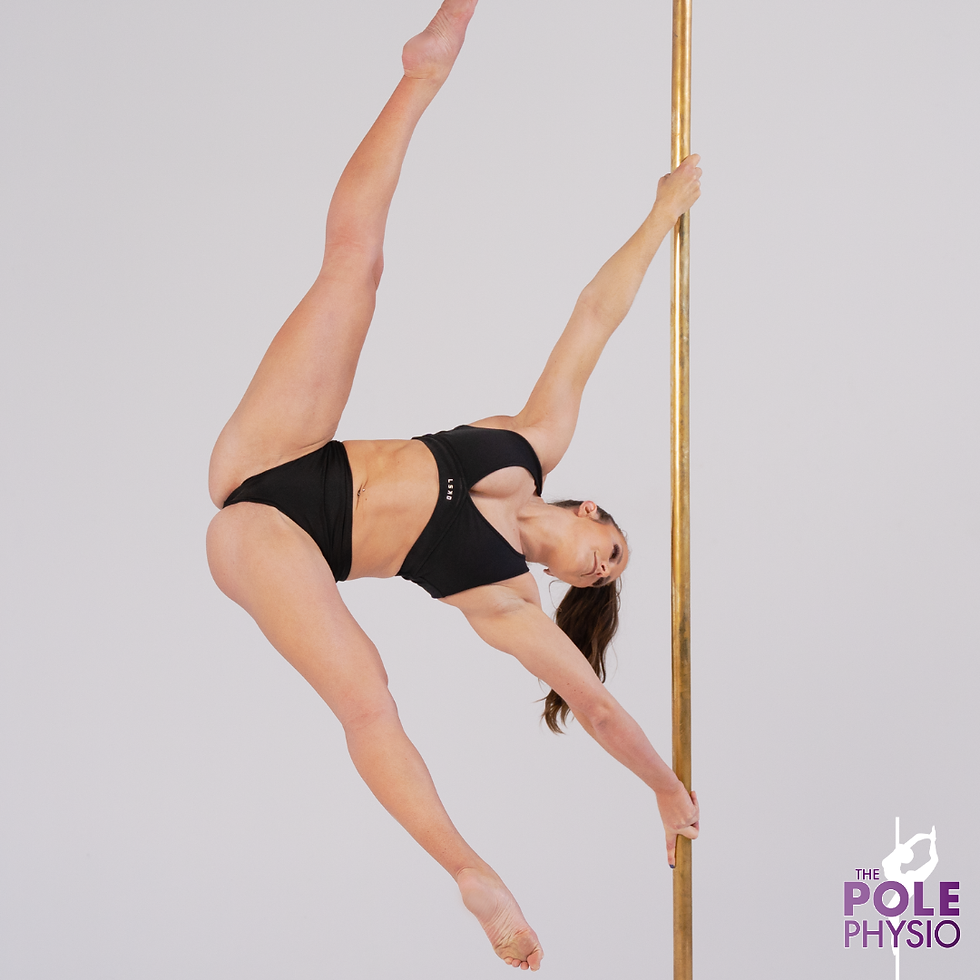
Every invert, handspring, deadlift and conditioning set creates a bit of stress that your body then has to repair. To do that well, it needs energy, protein, carbohydrates and enough recovery time. When the fuel isn't there, your body starts borrowing from its own reserves to keep up, and the longer that goes on, the harder it gets for your muscles and connective tissue to bounce back. You end up working harder for less.
The link between fuelling and injury
We spend hours on flexibility, conditioning and technique, but the thing that actually builds and repairs the tissue we're asking to perform often gets overlooked.
When you're consistently underfuelled, your body starts making compromises. Recovery slows, fatigue builds, and those little niggles start showing up more often and sticking around longer. Over time, that's how overuse injuries creep in, and how progress quietly stalls.
This is what sports health professionals are talking about when they mention RED-S (Relative Energy Deficiency in Sport). In plain terms, it's what can happen when you're not eating enough to support how much you're training. And no - you don't need to be an elite competitor for it to apply to you.
The myth that lighter is better

One of the more damaging beliefs floating around pole is that lighter automatically means better.
In reality, the poler/aerialist who's fuelling well, recovering well and steadily building strength will usually outperform the one who's running on empty. Being lighter doesn't make you stronger, getting stronger does. And strength needs fuel.
Three things you can do this week
If you're not sure where to start, keep it simple.
Eat before you train. Even a small snack an hour or so beforehand beats showing up on caffeine and good intentions. A muesli bar, fruit with nut butter, or some crackers will do the job.
Eat after you train. Recovery starts the moment you step off the pole, so try not to let dinner drift too late (we see you, #girldinner).
Stop skipping meals. Regular fuel across the day beats a perfect diet you can't stick to. Consistency wins.
The takeaway
If you're serious about your chosen activity, nutrition can't be the afterthought. The polers/aerialists who perform well aren't just training hard - they're recovering just as hard. Fuel is what holds your energy, your strength and your injury prevention together.
As a poler or aerialist, it's worth investing in your nutrition the same way you'd invest in a new pair of heels. Honestly? It'll probably get you closer to your goals than the shoes will.
If any of those symptoms near the top sounded a little too familiar, that's exactly where we start. Book an online appointment with our dietitians and we'll look at how you're fuelling around your actual training week, find the gaps, and build something that fits your schedule and the demands of pole and aerial, not a generic meal plan.
You don't need to overhaul everything. You just need to stop training hard and recovering on empty. Because you can't compete like an athlete if you don't fuel like one.
Train safe & fuel well!
The Pole Physio Team
xx


