


What to Eat Before & After Pole Training - Nutrition for Pole Dancers

(Because coffee and vibes can only take you so far)
Let’s be honest for a second. How many times have you gone to pole class running on nothing but a coffee, a busy day at work, and pure determination?
You get through the session (just), feel completely wrecked by the end, and then don’t eat properly until hours later, if at all? If that sounds familiar, you’re definitely not alone. It’s one of the most common patterns we see with pole dancers.
At The Pole Physio, one of the biggest things we notice holding people back isn’t their training program, their strength, or even their technique. It’s the fact that they’re simply not fuelling their body around training. This isn’t about having a perfect diet or overcomplicating things. It’s about giving your body enough support to actually do what you’re asking of it.

Why fuelling and nutrition for pole dancers actually matters
Pole is incredibly demanding on the body. You’re lifting your full bodyweight, generating power, holding isometric strength, and repeating high-skill movements, often multiple times per week. That’s a significant physical load.
When you go into training under fuelled, your body is already starting at a disadvantage. This often shows up as feeling flat or fatigued during sessions, struggling to build strength, slower recovery between training days, or picking up those small niggles that don’t seem to go away.
Nutrition isn’t something extra you add on top of training. It’s a fundamental part of it.
What to eat before pole
One of the most common mistakes we see is not eating before class, especially for evening sessions. Many dancers go several hours without food and then expect their body to perform at a high level. So let’s help you out in understanding the basics….
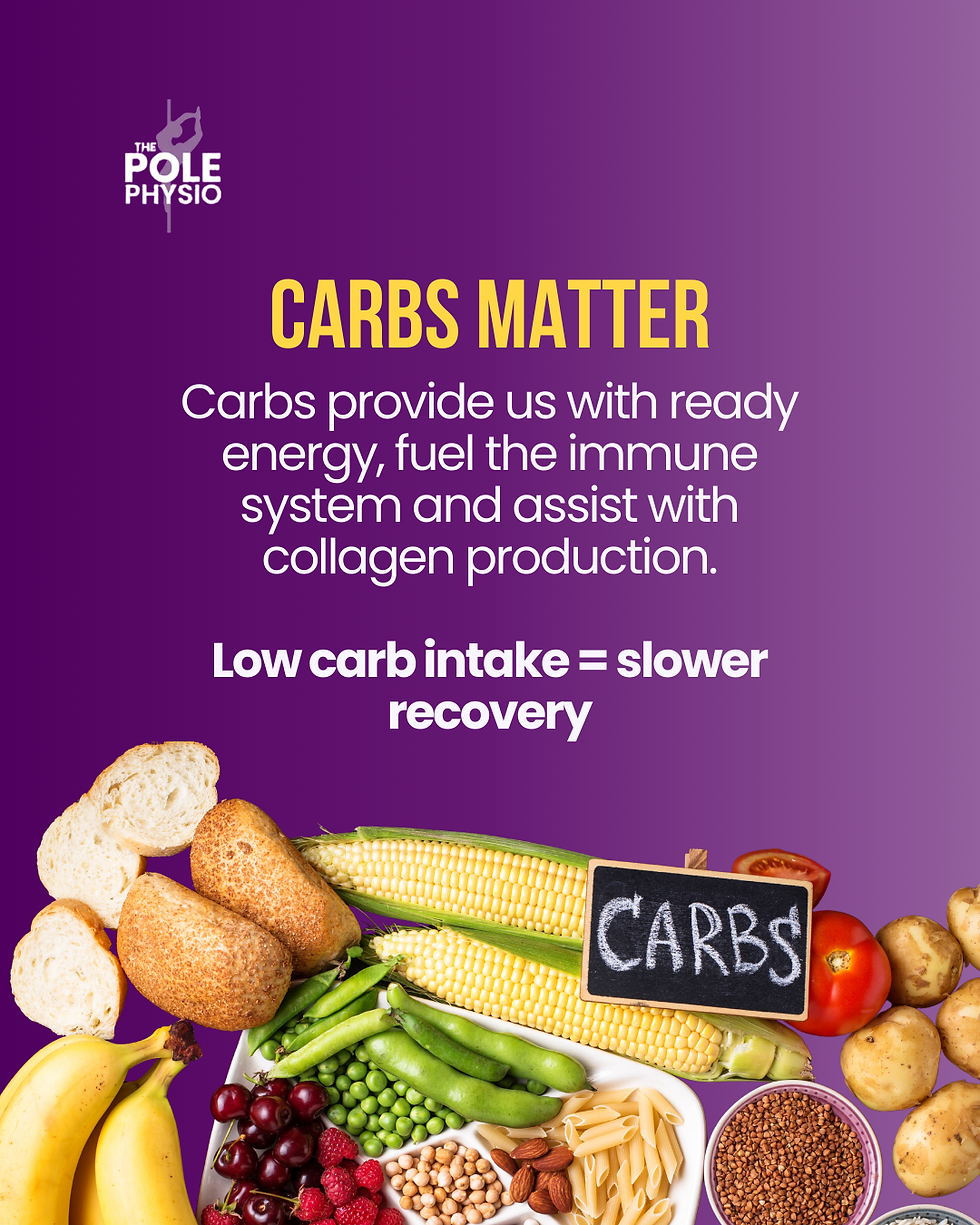
Ideally, you want to eat around one to two hours before training. This allows enough time for digestion while still providing your body with accessible energy for your session. If you’re training for longer periods or doing multiple classes, having a small snack during training can also help maintain energy levels.
In terms of what to eat, keeping things simple works best. Your body primarily needs carbohydrates for energy and some protein to support muscle function. A combination of the two is usually ideal.
This might look like crackers with nut spread, fruit with nut butter, a muesli bar, popcorn, or a small handful of nuts. These options are quick, practical, and generally sit well in the stomach before training.
It’s also worth being mindful of very high-fat meals close to class. While fats are important for overall health, they can slow digestion and feel heavier, which isn’t always comfortable when you’re inverting or engaging your core intensely.
Two patterns tend to cause the most issues. The first is eating a large meal too close to class, which can leave you feeling bloated or nauseous. The second, and far more common, is not eating at all. If you’ve gone four to eight hours without food before training, your body is already on the back foot. Even introducing a small snack beforehand can make a noticeable difference in how you feel.
What to eat after pole
After training, your body shifts into recovery mode. This is where nutrition and diet for pole dancers plays a key role in helping your body repair, restore energy, and prepare for your next session. And most importantly - help you get stronger!
Aiming to eat within one to two hours after training is a good general guide. For most people, this will simply be their regular dinner. On the nights you train, you need to the #girldinner out of the equation.

A balanced post-training meal should include carbohydrates to replenish energy stores, protein to support muscle repair, and some fats for overall recovery. This doesn’t need to be complicated. Meals like a chicken and rice bowl, a burrito bowl, pasta with meat sauce, or eggs on toast are all great options.
For those attending later classes, it’s completely normal for dinner to be pushed back. Your body still needs fuel at that time, even if it’s later than your usual routine. If you’re not ready for a full meal immediately after class, having a small snack first can help bridge the gap. Options like yoghurt, chocolate milk, a protein smoothie, or fruit with yoghurt or nut spread work well, followed by a more complete meal when you’re able. Alternatively you may eat a lighter early dinner a few hours before class and eat a more substantial snack after.
Nutrition and injury risk for pole dancers
Do you know that there is a direction link to under fuelling and injury risk in pole?
When the body is consistently under fuelled, it can lead to increased fatigue, slower recovery, and greater strain on muscles and tendons. Over time, this can contribute to the development of overuse injuries. Fuelling properly supports muscle recovery, tendon health, and your ability to train consistently. In practice, that means more time progressing in your training and less time dealing with setbacks.
So let’s fuel well to keep you injury free!
The takeaway
If there’s one thing to take from this, it’s that not eating before training is likely holding you back more than you realise.
You don’t need to overhaul your entire routine or aim for perfection. Often, the biggest impact comes from small, consistent changes, like adding a simple snack before class and prioritising a balanced meal afterwards.
When you fuel your body properly, you give yourself the best chance to perform well, recover effectively, and continue progressing in the sport you love.
Need tailored support with your nutrition?
If you’re unsure how to fuel your training, especially around a busy schedule or multiple sessions per week, getting personalised support can make a significant difference.
Book an online appointment with our Dietitians for tailored pole and aerial nutrition advice, and together we can help you unlock your training goals.
Train safe!
The Pole Physio Team
xx

