


A Pole & Aerial Dietitian’s Top Tips for A Healthier Diet

Most of the time when people come to me wanting to “eat healthier,” they expect me to hand out lists of foods they can’t eat or demonise things as “bad” or “unhealthy.” But honestly, if someone starts telling you that (I’m looking at you, home allergy test kits) and there’s no legitimate reason for it, I’d be very skeptical. Often, many of these people’s diets are already way too restricted.

This comes up in a few ways:
Cutting out major food groups such as dairy, meat or gluten containing foods, which removes certain beneficial nutrients from the diet
Relying on convenience meals (often for good reason!), making it harder for them to meet fibre and micronutrient requirements
Eating very little food to restrict their caloric intake. The problem is, restriction makes us hungrier, and it also makes the brain fixate on everything we’re trying to avoid until it eventually ends in feeling completely out of control around food, and eating more highly processed foods (Barraclough et al., 2019).
Trying to eat ‘clean’, which is sometimes a combination of cutting out major food groups, eating few calories and demonising processed foods, which can end in having a negative relationship with food, ending up in a binge and restrict cycle and becoming nutrient deficient (Fischer & Ouyang, 2025).
So, instead of taking things away, I often encourage people to add more. Adding nutritious foods to your diet, even without purposefully excluding discretionary foods also known as highly processed foods, or restricting food groups, can increase the overall quality of your diet, offset intake of less nutritious foods, and improve health markers and improve the health of your gut! (Nair et al., 2016; Wallace, 2025; Wibisono et al., 2017; Um et al., 2023)

For example, I love a good convenience meal every now and then. On really busy weeks when I haven’t prepped as much as usual, or I know I’ll need something quick, I’ll grab a few My Muscle Chef, Easy Eats, or Youfoodz meals from the grocery shop. They’re usually pretty good for protein and carbs, but they can be a bit low in fibre and vegetables, which means they don’t keep you full for long.
Instead of trying not to eat, only eating snacks, getting takeaway food or spending a long time making a meal from scratch, my favourite strategy is digging around in my fridge or freezer for leftover veggies to add to my convenience meal. For example, my chicken pasta meal was looking a bit sad until I found a tomato, a zucchini and some onion left in the fridge, threw them through my vegetable dicer (my favourite utensil, highly recommend), pan fried them quickly and mixed them in. It took almost no time, added a heap more veg and fibre, and actually made the meal way more filling.
How else can I add more you ask? Great question!
Add protein and fibre to your snack. Enjoy having a packet of chips as a snack? Add some protein from a few slices of light cheese and fibre from veggie sticks or a piece of fruit. You benefit from feeling more full and satisfied, while also getting more fibre, protein and micronutrients. You’ll also be less likely to go back for another packet and still not feel satisfied. Already having a high protein snack like a protein yoghurt? Add some fruit and some nuts to add fibre, healthy fats and even more nutrients.
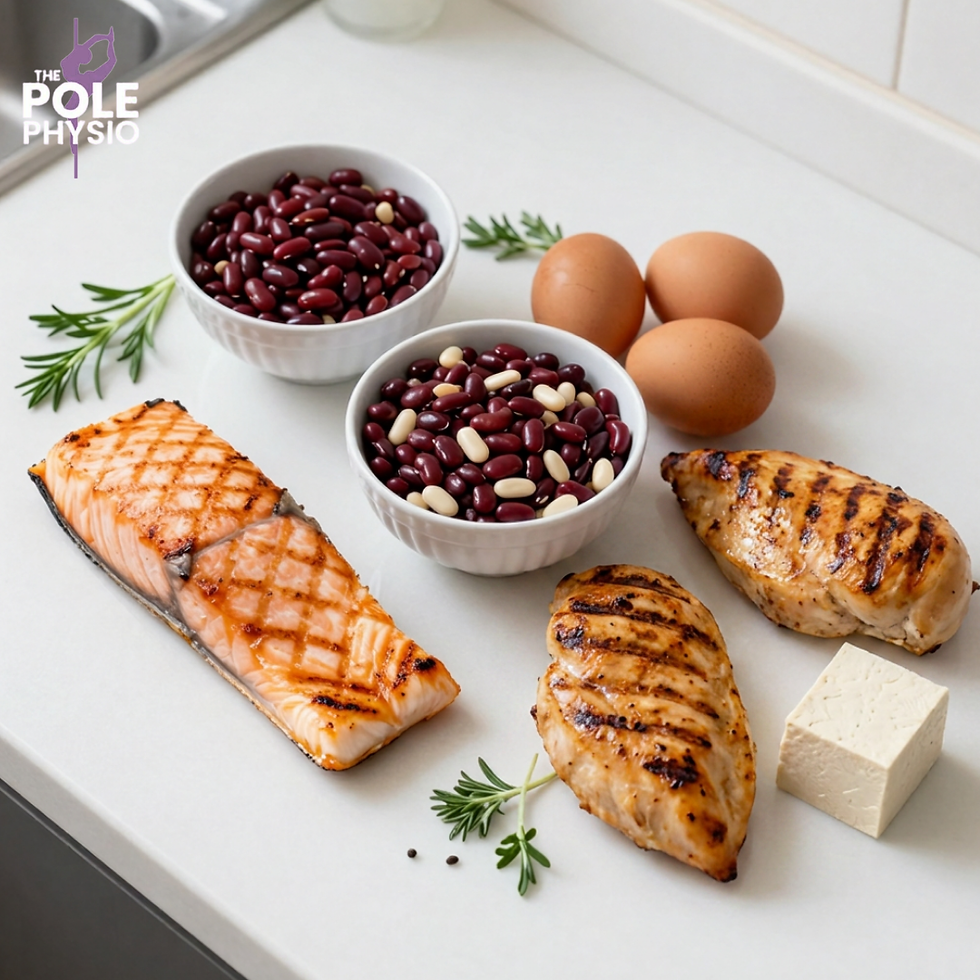
Add something you haven’t had in a while. I love the saying, “the next best food is the one you haven’t eaten lately.” In practical terms, it means:
If you’ve been eating chicken every day, the next “best” protein might be salmon or legumes.
If you always eat oats for breakfast, the next best option might be eggs or yoghurt.
If you never eat leafy greens, that’s probably where you’ll get the biggest nutritional return.
Add beans, nuts and/or legumes. These foods are rich in fibre, plant protein, healthy fats and key micronutrients like magnesium, iron and zinc. They also support gut health and help keep you full for longer. Even adding a small serve consistently can meaningfully improve overall diet quality.

Add a side salad. Think cucumber, tomato, carrot, capsicum, leafy greens, olive oil and lemon. Adding a side salad increases volume, fibre, potassium and antioxidants, which can improve satiety. It is one of the simplest ways to lift the nutrient density of a meal without changing the main dish.
Add wholegrains instead of always choosing white options. Swap white bread for wholemeal, white rice for brown rice, or regular pasta for wholegrain when it suits you. Wholegrains provide more fibre, B vitamins and minerals, and are associated with better long term health outcomes.
If you want to learn more about building a healthy diet that supports your lifestyle and fuels your training, book a consult with our dietetic team at thepolephysio.com/book-online.
Fuel well,
The Pole Physio Team
xx
References
Barraclough EL, Hay-Smith EJC, Boucher SE, Tylka TL, Horwath CC. Learning to eat intuitively: A qualitative exploration of the experience of mid-age women. Health Psychology Open. 2019;6(1). doi:10.1177/2055102918824064
Fischer, D., & Ouyang, P. (2025). Lifestyle-Related Factors for Improving Diet Quality. Nutrients, 17(3), 448. https://doi.org/10.3390/nu17030448
Nair, M. K., Augustine, L. F., & Konapur, A. (2016). Food-Based Interventions to Modify Diet Quality and Diversity to Address Multiple Micronutrient Deficiency. Frontiers in Public Health, 3, 277. https://doi.org/10.3389/fpubh.2015.00277
Um, C. Y., Peters, B. A., Choi, H. S., Oberstein, P., Beggs, D. B., Usyk, M., Wu, F., Hayes, R. B., Gapstur, S. M., McCullough, M. L., & Ahn, J. (2023). Grain, Gluten, and Dietary Fiber Intake Influence Gut Microbial Diversity. Cancer Research Communications, 3(1), 43-53. https://doi.org/10.1158/2767-9764.CRC-22-0154
Wallace, T. C. (2025). Defining “Carrier Foods” – A Novel Basis for Evaluating Indirect Contributions to Diet Quality. Journal of the American Nutrition Association, 1-4. https://doi.org/10.1080/27697061.2025.2571635
Wibisono, C., Probst, Y., Neale, E., & Tapsell, L. (2017). Changes in diet quality during a 12 month weight loss randomised controlled trial. BMC Nutrition, 3, 38. https://doi.org/10.1186/s40795-017-0157-z


